

이 글의 한국어 버전은 아래에서 이어집니다!
A story of tradition and tech at a Korean restaurant inside a Hyundai factory in Singapore
The recent expansion of my content to include advanced industry has raised some curious eyebrows. I see much common ground between the tradition and tech of Korea. Both, for example, are rooted in making physical things. Korea has a tradition of making things well - think ceramics like Koryo Celadon or Joseon Baekja - that extends to its manufacturing prowess today.
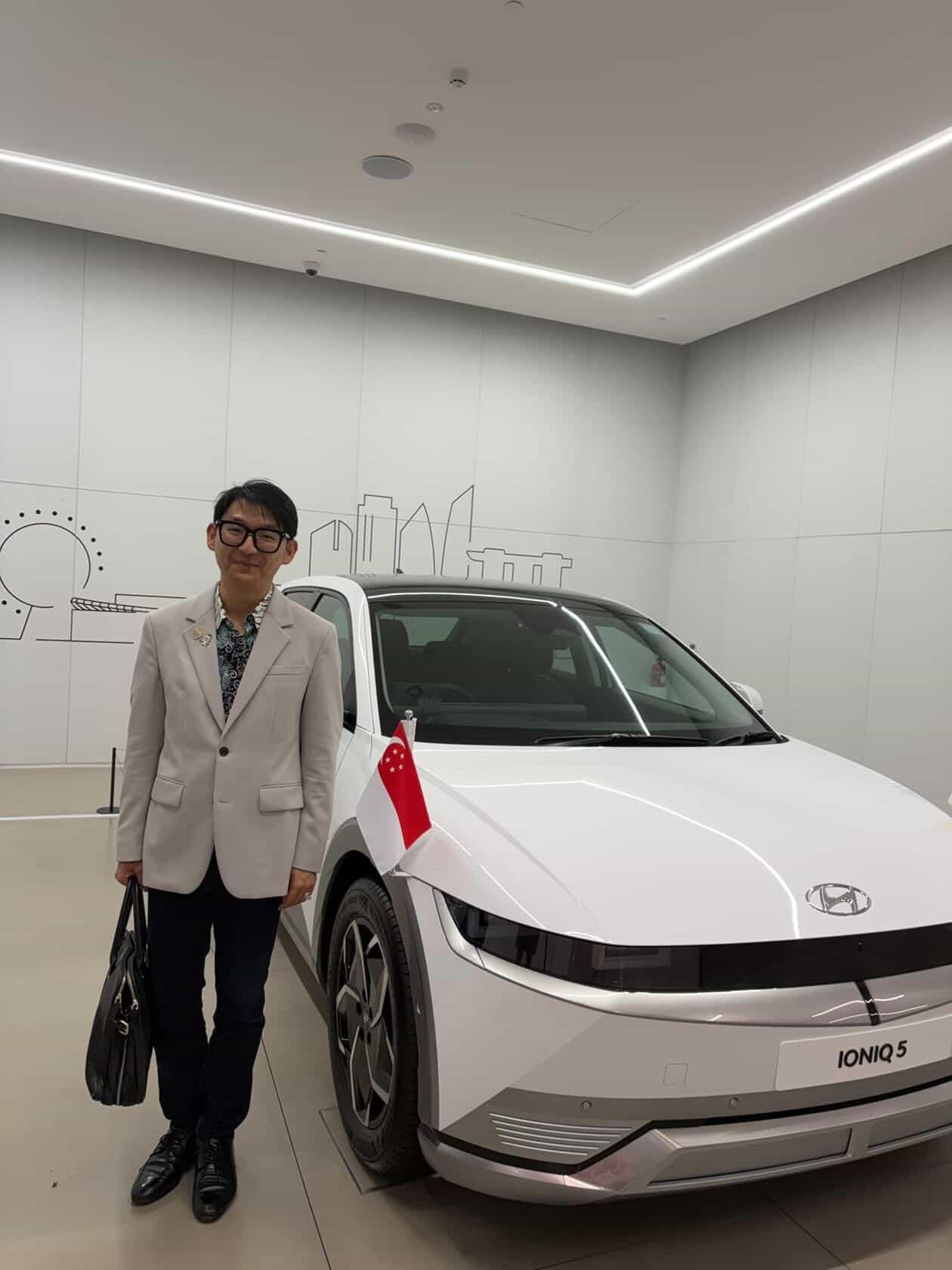
Hyundai Motor Group Innovation Center Singapore (HMGICS) embodies this throughline powerfully. It's an R&D hub for the future not only of mobility but of manufacturing itself, where EVs are built through a cell-based (rather than conveyor-belt) system that consolidates production for optimal human-robot collaboration. But the Center also houses a restaurant inside, where Korean food is prepared and served amidst tableware, furniture, and interior design that showcase traditional craft and texture in a sleek, modern way. Even some of the ingredients are made in-house, quite literally: jang (Korean traditional sauces) ferment at the entrance to the restaurant in onggi (earthenware for storage), visible in their climate-controlled environment through glass walls. Some of the greens and herbs in the dishes grow in the smart farm right inside the building, bringing the theme of “making” back to the that most primordial form of manufacturing: agriculture.
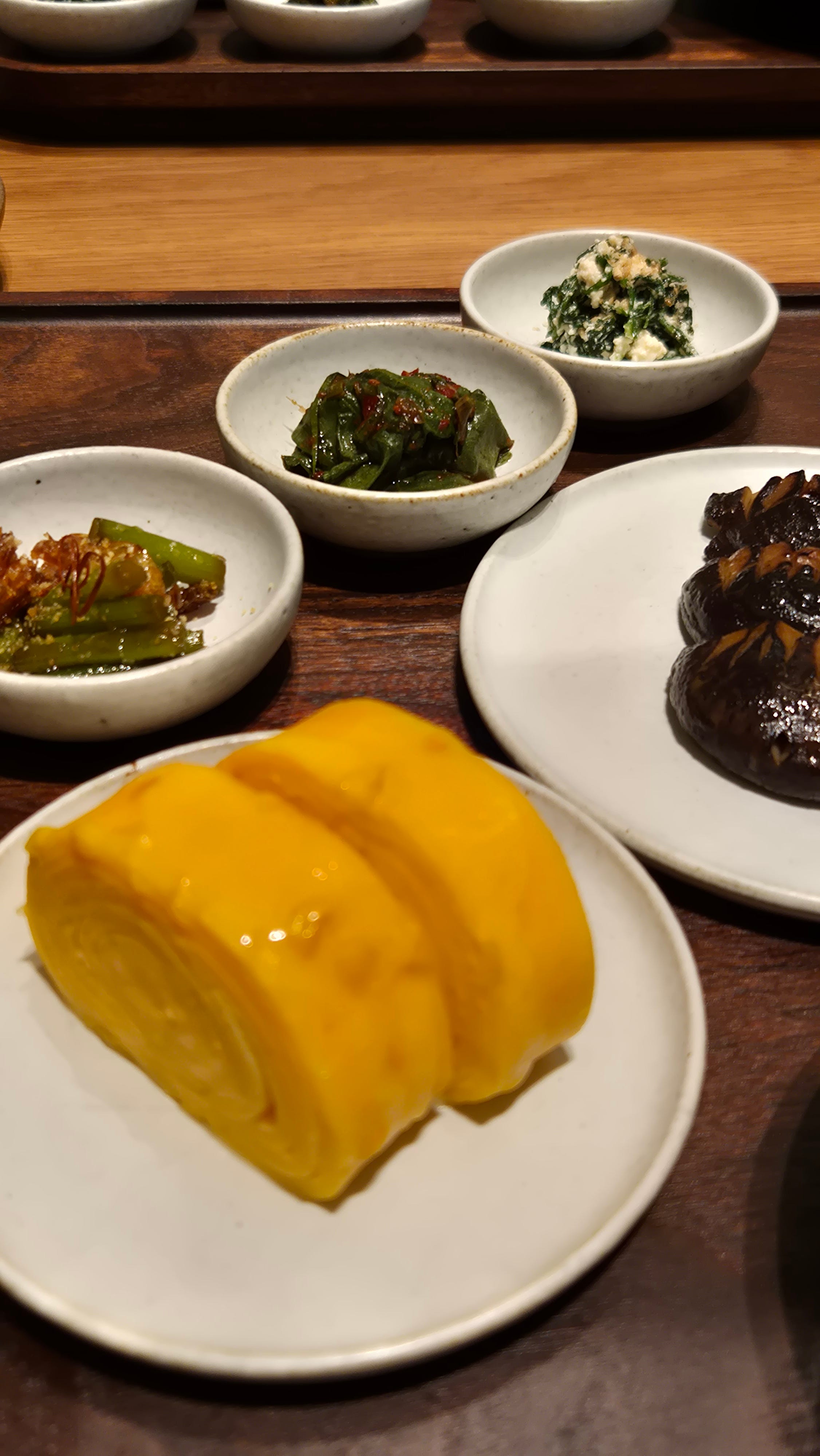
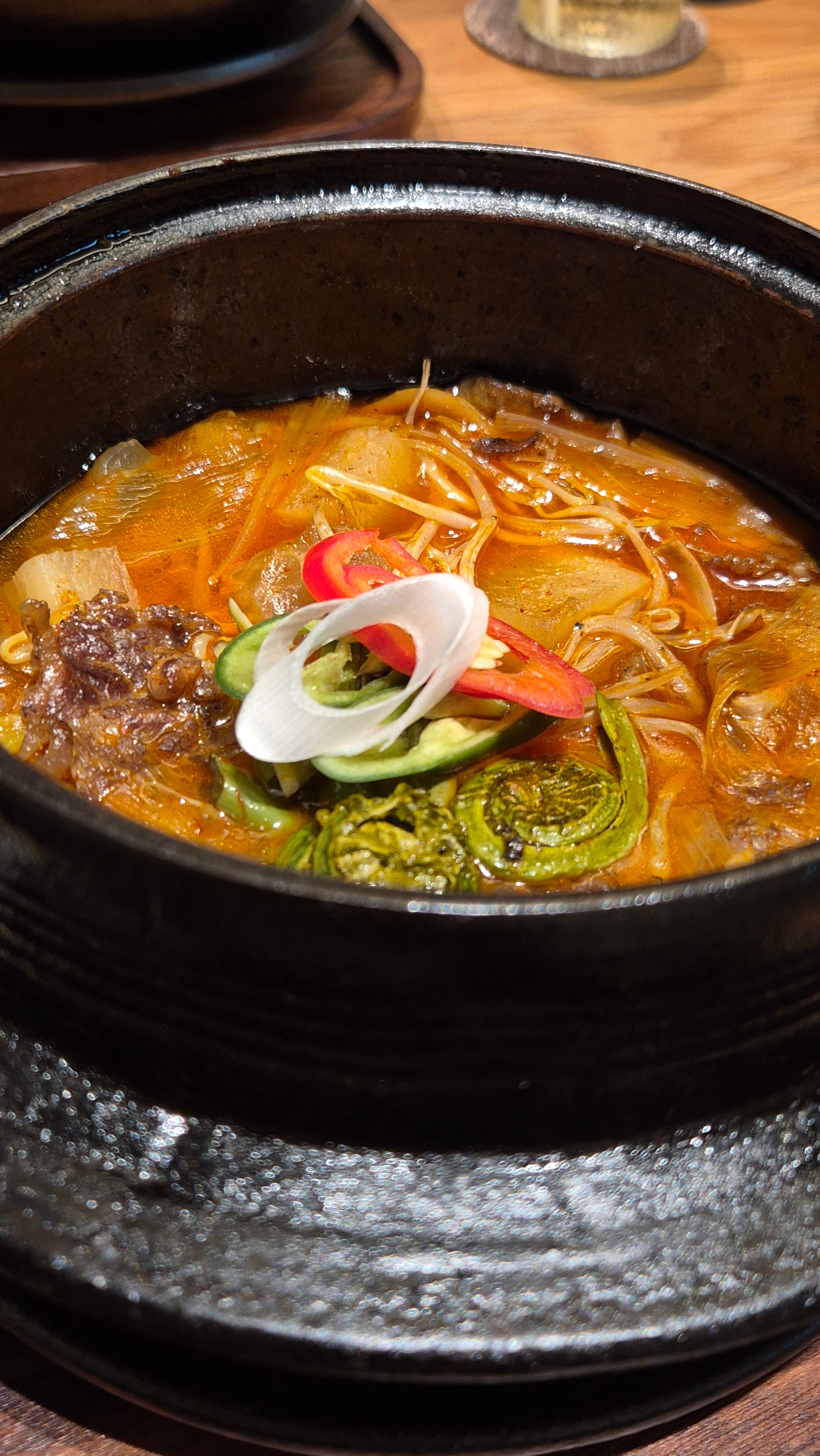
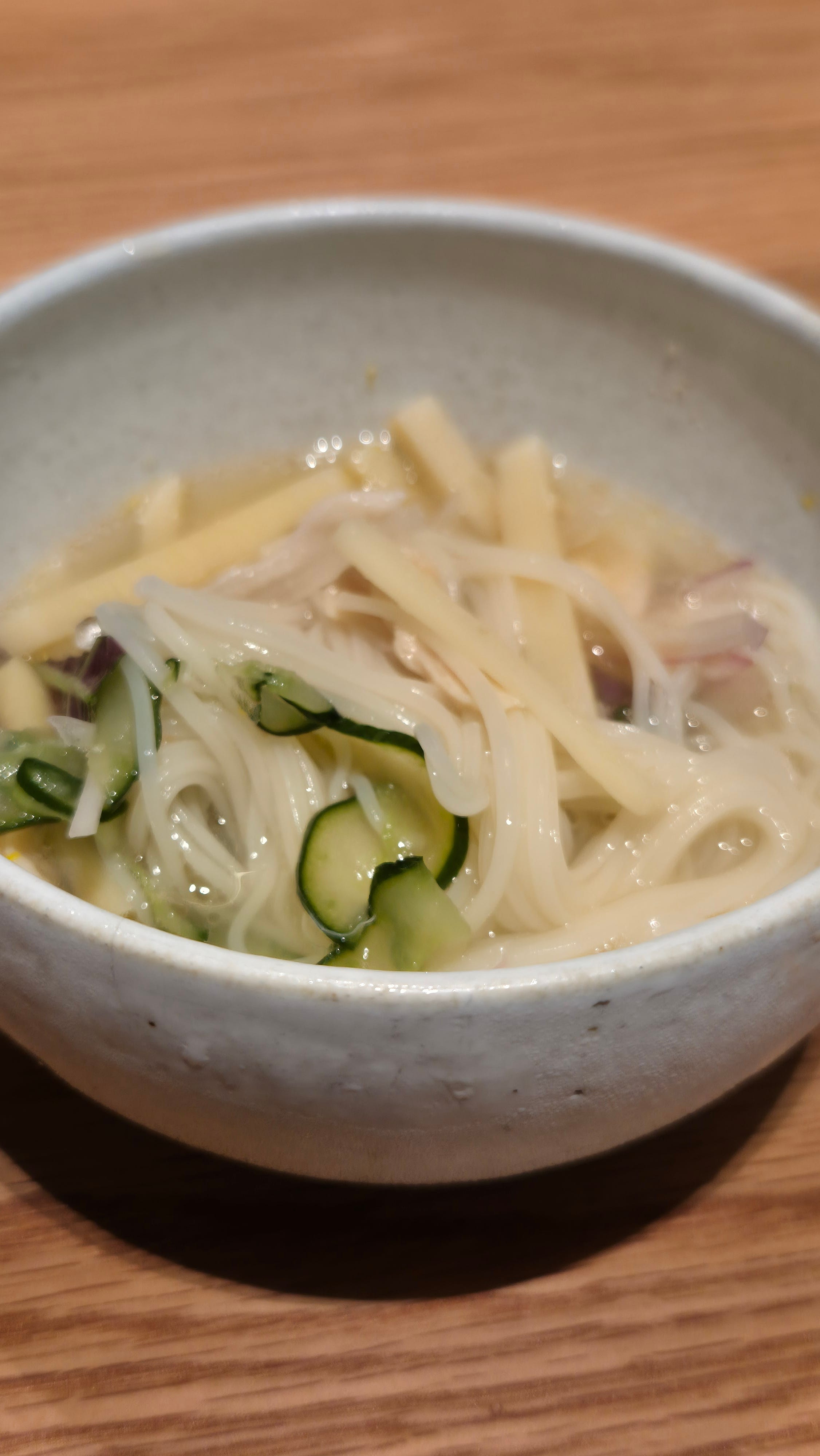
The food at Na Oh is without gimmicks, a simple-elegance homage to Korean classics. The texture of a piece of tofu and the egg wash coating a slice of lotus root, the clean taste of a side soy sauce or the broth in a gomtang - all are prepared to make each note, each ingredient claim its limpid presence. The meal is reminiscent of a pianist who plays Mozart with hardly any rubato, conveying depth with crisp dynamics and clarity of touch alone.
But it's not all about preciosity. Going back to the interior design: yes, there is the warmth of wood, the softness of hanji, and the earthiness of ceramics, and they do their job well in conveying a certain calm, as my Singaporean friend Jason remarked. But these elements are counterpoised against industrial, almost brutish, structures. In particular, the corrugated exposed concrete speaks volumes about the bulldozer will with which modern Korea was forged. In this way, Na Oh brings together the two contrasting but equally authentic aspects of modern Korean identity: the morning calm and the tenacious machine.
Another thing my Singaporean friends noted: with every season comes a new menu, and every new menu is offered for tasting to everyone working at HMGICS. It struck me that this is the kind of merging of culture and industry that we need. Some layer of the aesthetic experience of tasting a Na Oh dish has to light up a specific area of the brain, form a specific neural pathway, that then impacts or inspires a design or production decision. The continuity of Korean identity throughout all that we make must be more than cosmetic; it must come from brains that synthesize the disparate.
Speaking of my Singaporean friends, Abby and Jason are regulars at Na Oh, cherished guests for whom the very same table is kept for every time they visit. It was their idea that I join them at Na Oh during my trip to Singapore. Their love for Korea amazes me, but they tell me my love for Singapore is equally amazing to them. Had I not mentioned my love for Singapore NDP songs, Singapore Airlines, Nanyang aesthetics, and Perankan food, would we have this same depth of friendship? Our relationship rests on a foundation of mutual love for each other's countries and cultures. And now I find myself being reintroduced to Korean cuisine and industry by my Singaporean friends.
Genuine relationships are one of the very best things we can make. They are the glue that not only bond us to each other but also bring together our different passions and commitments in beautiful ways. My dinner at Na Oh was a delightful lesson in the importance of making things well - old things, new things, the story to bind the two, and the friends to share them with.
Thank you Abby, Jason, and Jake, the general manager who welcomed me to Na Oh so warmly.
(Come visit my Instagram @markkimkorea for more photos.)
싱가포르 현대자동차 혁신센터 내 한식당에서 마주한 전통과 기술의 이야기
최근 제가 다루는 콘텐츠의 영역이 첨단 산업으로 확장되자 의아해하는 이들이 있었습니다. 하지만 저는 한국의 전통과 기술 사이에서 깊은 공통분모를 발견하곤 합니다. 두 영역 모두 ‘물리적인 무언가를 만드는 행위’에 그 뿌리를 두고 있기 때문입니다. 고려청자나 조선백자와 같이 ‘제대로 만드는’ 한국의 전통적 장인 정신은 오늘날의 제조 역량으로 고스란히 이어지고 있습니다.
싱가포르 현대자동차 그룹 혁신센터(HMGICS)는 이러한 맥락을 가장 강력하게 구현한 공간입니다. 이곳은 단순히 모빌리티의 미래를 연구하는 곳을 넘어, 제조 방식 그 자체의 혁신을 꾀하는 R&D 허브입니다. 컨베이어 벨트 대신 ‘셀(Cell)’ 기반 시스템을 도입하여 인간과 로봇의 협업을 최적화하고 생산성을 극대화한 것이 특징입니다.
흥미로운 점은 이 혁신적인 센터 내부에 한국 음식을 선보이는 식당 ‘나오(Na Oh)’가 자리 잡고 있다는 사실입니다. 이곳의 식기, 가구, 인테리어는 전통 공예의 질감을 현대적인 감각으로 풀어내고 있습니다. 심지어 식재료 일부는 건물 안에서 직접 ‘제조’됩니다. 한국 전통 장류가 식당 입구의 유리벽 너머 기후 제어 시스템을 갖춘 공간에 놓인 옹기에 담겨 발효되고 있으며, 각종 채소와 허브는 건물 내 스마트 팜에서 재배됩니다. 이는 ‘만듦’이라는 테마를 인류의 가장 원초적인 제조 형태인 ‘농업’으로 연결 짓고 있습니다.
‘나오’의 음식은 기교 없이 한국 고전의 정수를 우아하고 담백하게 오마주합니다. 두부의 질감, 연근을 감싼 달걀물, 곰탕 국물과 간장의 깔끔한 맛까지, 모든 요소는 각 재료가 지닌 맑고 투명한 존재감을 드러낼 수 있도록 조리된 듯 하였습니다. 마치 루바토를 거의 사용하지 않고 명료한 타건과 절제된 다이내믹만으로 깊이를 전하는 모차르트 피아니스트의 연주를 연상케 합니다.
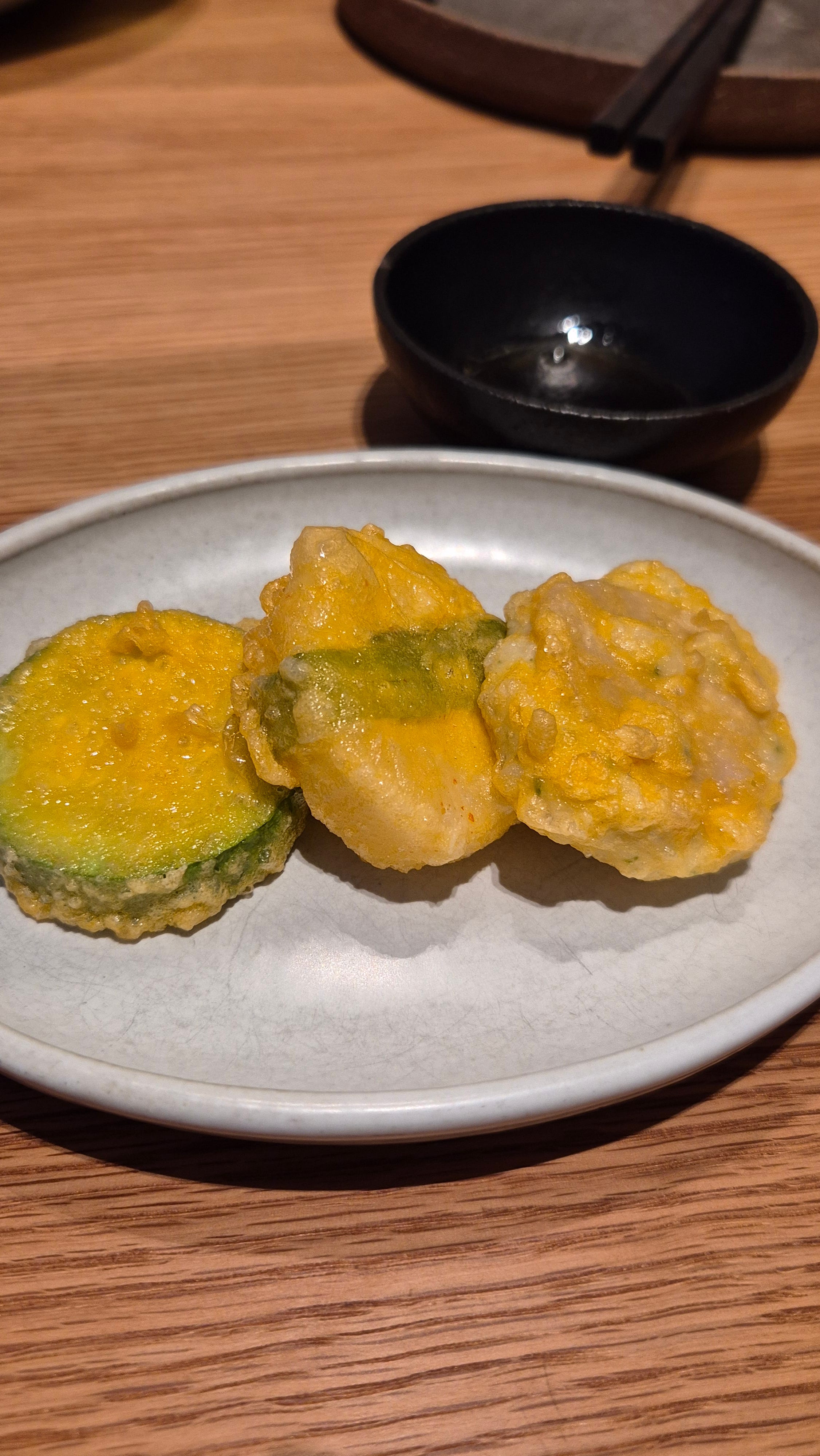
그러나 이곳은 단순히 섬세함만을 강조하지 않습니다. 인테리어를 다시 살펴보면, 물론 나무의 온기, 한지의 부드러움, 도자기의 토질적인 느낌은 평온함을 자아냅니다. 제 싱가포르 친구 Jason도 이 부분을 언급했습니다. 하지만 그 이면에는 산업적이고 투박한 구조물들이 자리합니다. 특히 노출된 골조 콘크리트는 현대 한국을 일궈낸 강인한 의지와 추진력을 대변하는 듯 하였습니다. 이처럼 ‘나오’는 현대 한국 정체성의 두 가지 대조적이면서도 진실된 모습, 즉 ‘고요한 아침’과 ‘강하고 시끄러운 기계’를 한데 아우릅니다.
싱가포르 친구들이 언급한 또 다른 인상적인 점은, 계절마다 바뀌는 신메뉴를 HMGICS에서 근무하는 모든 임직원에게 시식용으로 제공한다는 사실입니다. 이는 문화와 산업의 융합이 멋지게 실현되는 지점입니다. ‘나오’의 요리를 맛보는 미학적 경험이 뇌의 특정 영역을 자극하고 새로운 신경 경로를 형성하여, 결국 디자인이나 생산 과정에서의 의사결정에 영감을 주는 선순환을 이끌어내었으면 좋겠다는 생각을 하였습니다. 우리가 만드는 모든 것 속에 깃든 한국적 정체성의 연속성은 단순히 외형적인 것이 아니어야 합니다. 그것은 서로 이질적인 것들을 합성해낼 수 있는 창의적인 사고에서 비롯되어야 합니다.
저의 싱가포르 친구들인 Abby 와 Jason은 ‘나오’의 단골로, 방문할 때마다 늘 같은 테이블을 안내받을 정도로 이곳을 아낍니다. 이번 싱가포르 여행 중 이곳을 방문하자고 제안한 것도 그들이었습니다. 한국에 대한 그들의 깊은 애정은 놀라울 정도였고, 그들 역시 싱가포르 국경일 노래와 싱가포르 항공, 남양(Nanyang) 에스테틱, 페라나칸 음식에 대한 저의 각별한 애정에 놀라워했습니다. 만약 서로의 국가와 문화에 대한 이러한 상호 존중과 애정이 없었다면, 우리의 우정이 이토록 깊어질 수 있었을까요? 이제 저는 싱가포르 친구들의 안내를 받으며 한국의 미식과 산업을 새롭게 재발견하고 있습니다.
진실된 관계야말로 우리가 만들 수 있는 가장 가치 있는 결과물 중 하나입니다. 관계는 사람과 사람을 잇는 접착제일 뿐만 아니라, 우리가 가진 서로 다른 열정과 과제를 아름다운 방식으로 결합해 주는 힘이기도 합니다. ‘나오’에서의 저녁 식사는 무언가를 제대로 만든다는 것의 중요성을 일깨워준 즐거운 수업이었습니다. 그것이 오래된 것이든, 새로운 것이든, 혹은 그 둘을 잇는 이야기이든, 이를 함께 나눌 친구든 말입니다.
Abby, Jason, 그리고 ‘나오'의 general manager 되시는 Jake Cho 께 감사드립니다.
(제 인스타그램 @markkimkorea 에서 더 많은 사진을 감상하십시오!)